OZEBOOK.COM
A-Z of Motorcycling
A selected motorcycle profile from the pages of the "All the World's Motorcycles" online book,
"The A to Z of Motorcycles" sometimes referred to as the "A-Z of Motorcycles."
BRENNABOR
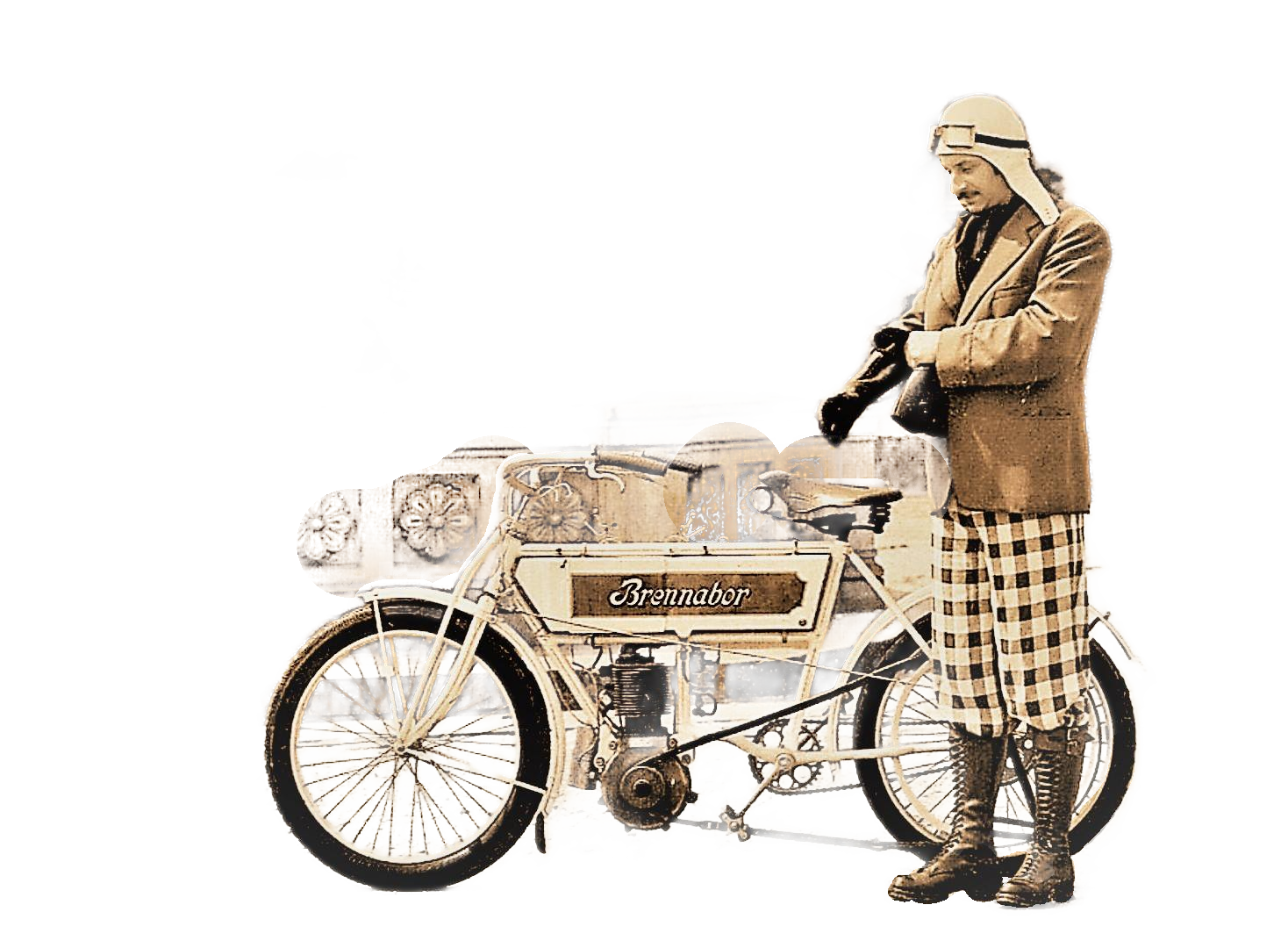 Brennabor-Werke, located in Brandenburg, operated from 1901 to 1912 (or 1916*) and again from 1933 to 1940. The name Brennabor, an old term for Brandenburg, was founded in 1871 by brothers Carl, Adolf, and Hermann Reichstein, who primarily manufactured baby carriages, eventually becoming the largest producer in Europe. When the bicycle craze swept through England and into Germany, they quickly adapted, producing 20,000 bicycles each year. The factory employed around 2,000 workers and exported products worldwide. In 1902, they began making motorcycles and cyclecars equipped with Fafnir and Zedel V-twin engines, which were sold until just before World War I. In 1903, they introduced motorised luggage tricycles powered by air-cooled single-cylinder engines of 2¼, 3½, and 5 hp from Fafnir, which remained in their catalog until 1912 when they ceased production of motor tricycles. By 1913, the company was exporting to German colonies as well as to Britain, Russia, Holland, Scandinavia, France, Italy, Spain, Austria-Hungary, the Balkan States, Argentina, Uruguay, Brazil, Australia, the Dutch East Indies, South Africa, and even China. However, the company faced several challenges during this time. Two founding brothers passed away—Adolph in 1910 and Hermann in 1913—leaving Carl Reichstein as the sole owner. He then transferred control to his three eldest sons, Walter, Carl Jr., and Ernst. The onset of war further complicated matters, resulting in the loss of his youngest son, Fritz, in 1917. Wilhelm Koch joined Brennabor's automotive division as the new chief engineer in mid-1913. By the late 1920s, Brennabor had expanded to 8,000 employees. In 1933, they resumed motorcycle production using externally sourced Fichtel & Sachs two-stroke engines of 48cc and later 98cc, which were designed in a moped style, later mockingly referred to as the Hermännchen. The motorcycles were well received, but production halted in 1940, after which the factory's output contributed to the war effort. Following the war, the Russians dismantled the factory and relocated it to East Germany, where it somewhat resumed the production of baby carriages. Other businesses in Brandenburg, such as the Opel plant, faced similar fates, a pattern echoed by Russia 70 years later during its invasion of Ukraine and other Eastern European nations. The company was also a significant manufacturer of quality automobiles, including the well-known Brennabor Juwel. 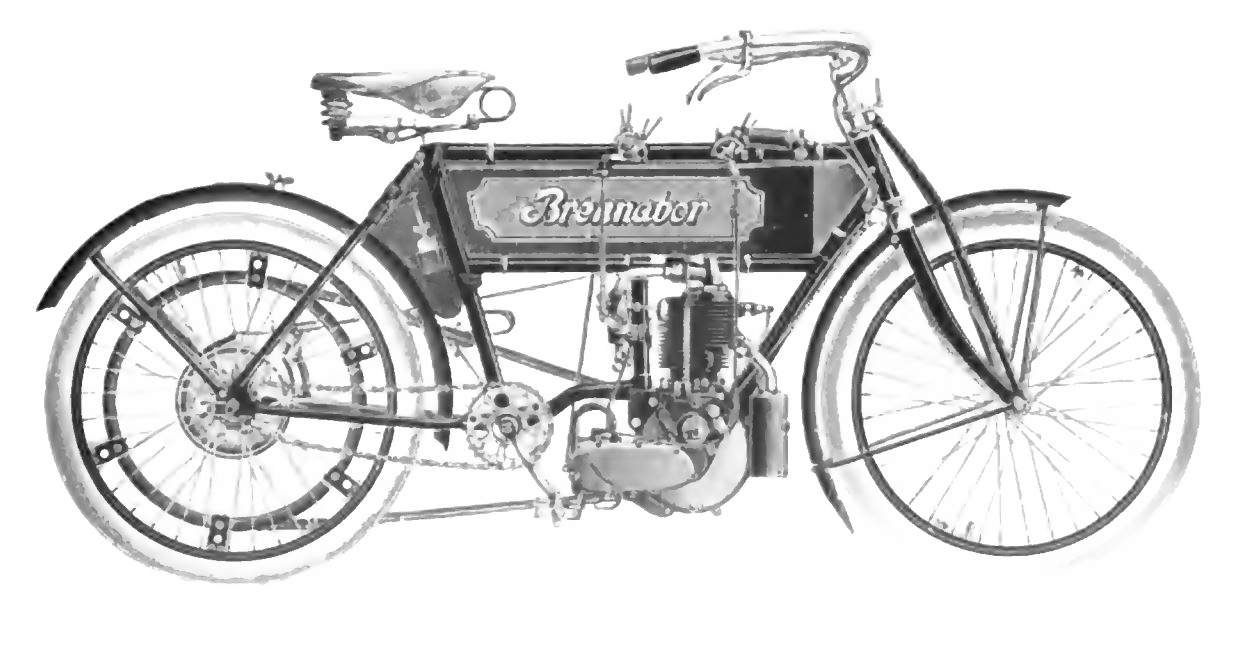 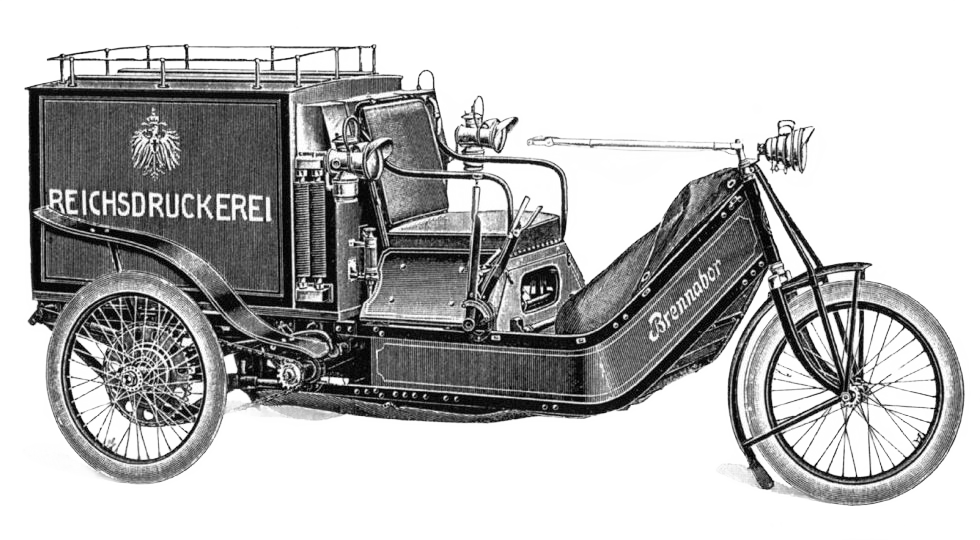 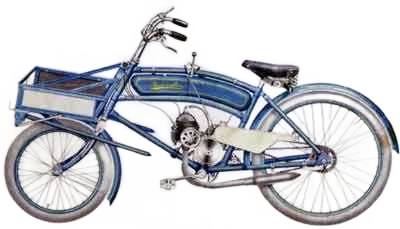 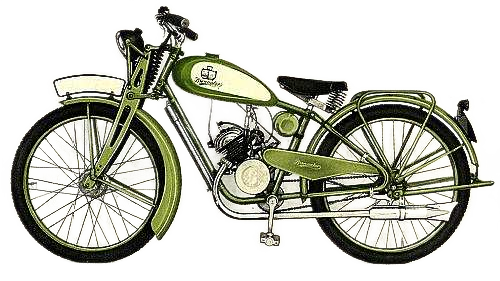 |